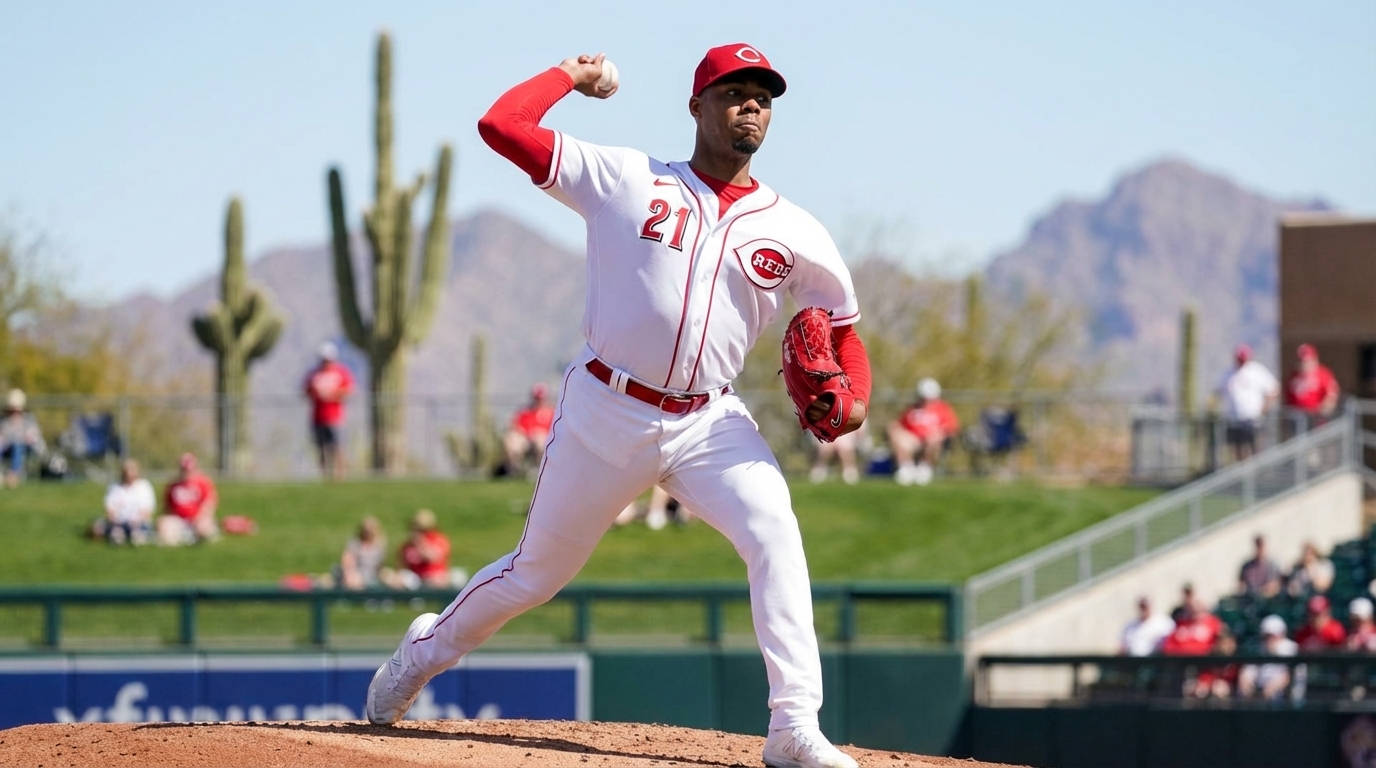
On March 11, Hunter Greene underwent arthroscopic surgery on his right elbow to remove bone chips and loose bodies — the culmination of chronic bone spurs that had been causing pain down the stretch of an otherwise dominant 2025 season. The Reds' ace won't throw a pitch in a regular season game until July at the earliest, and for a team with playoff aspirations, the loss is enormous.
But here's the part nobody's talking about yet: Greene's absence may end up being the single best thing that could have happened for the long-term future of Reds pitching.
The Good News First
Greene's UCL is clean. That's the headline that matters most. This is not Tommy John surgery. This is not a structural issue that threatens his career. It's a cleanup procedure — bone chips and loose bodies removed arthroscopically, with a clear timeline back to full health. Greene shared an emotional message with fans on social media after the surgery that went viral, expressing his frustration but also his confidence in a full recovery.
The bone spurs had been building all season, and Greene pitched through increasing discomfort in the second half of 2025. In hindsight, the surgery was inevitable — it was just a matter of when, not if. Getting it done in March means a July return, which gives the Reds their ace back for the stretch run and a potential playoff push.
The Development Accelerator
Here's where the silver lining becomes impossible to ignore. Without Greene's injury, Chase Burns, Rhett Lowder, and Brandon Williamson would likely have started the season in Triple-A or in limited bullpen roles. The Reds' rotation of Abbott, Lodolo, Singer, and Greene was set, with the fifth spot the only real competition.
Instead, all three young arms are on the Opening Day roster. They'll share two rotation spots in a creative tandem arrangement, getting meaningful major league innings from Day 1. By the time Greene returns in July, Burns and Lowder could have 60 to 80 innings of big league experience under their belts — development time that would have taken an additional full season to accumulate otherwise.
Think about what the rotation looks like in August: Abbott, Lodolo, Greene, Burns, Singer — with Lowder and Williamson as depth options who have already proven they can handle major league hitters. That's seven starters for five spots, the kind of pitching depth that championship teams are built on.
The Financial Calculation
There's a cold-blooded business angle here too. Brady Singer is making $12.75 million in his final year of team control and is widely expected to be traded at the deadline if the Reds fall out of contention. If Burns, Lowder, and Williamson prove themselves in the first half, Singer becomes expendable — and the prospect return from a midseason Singer trade could further strengthen an already deep farm system.
Greene's surgery didn't create this possibility, but it accelerated the timeline dramatically. The Reds' front office now has four months of live-game data on their young pitchers before they have to make any trade deadline decisions. That's an intelligence advantage money can't buy.
When Greene Returns
The target is July, and everything about the recovery timeline suggests that's realistic. Greene will begin a throwing program in the coming weeks, progress to bullpen sessions, then a minor league rehab assignment before rejoining the rotation. The Reds have been methodical about his recovery — no shortcuts, no rushed timelines.
When he does come back, he'll slot into a rotation that has been battle-tested by four months of regular season competition. The young arms will have proven themselves or exposed areas that need work. Either way, the Reds will know exactly what they have. And that knowledge, born from necessity, could be the foundation of something special for years to come.