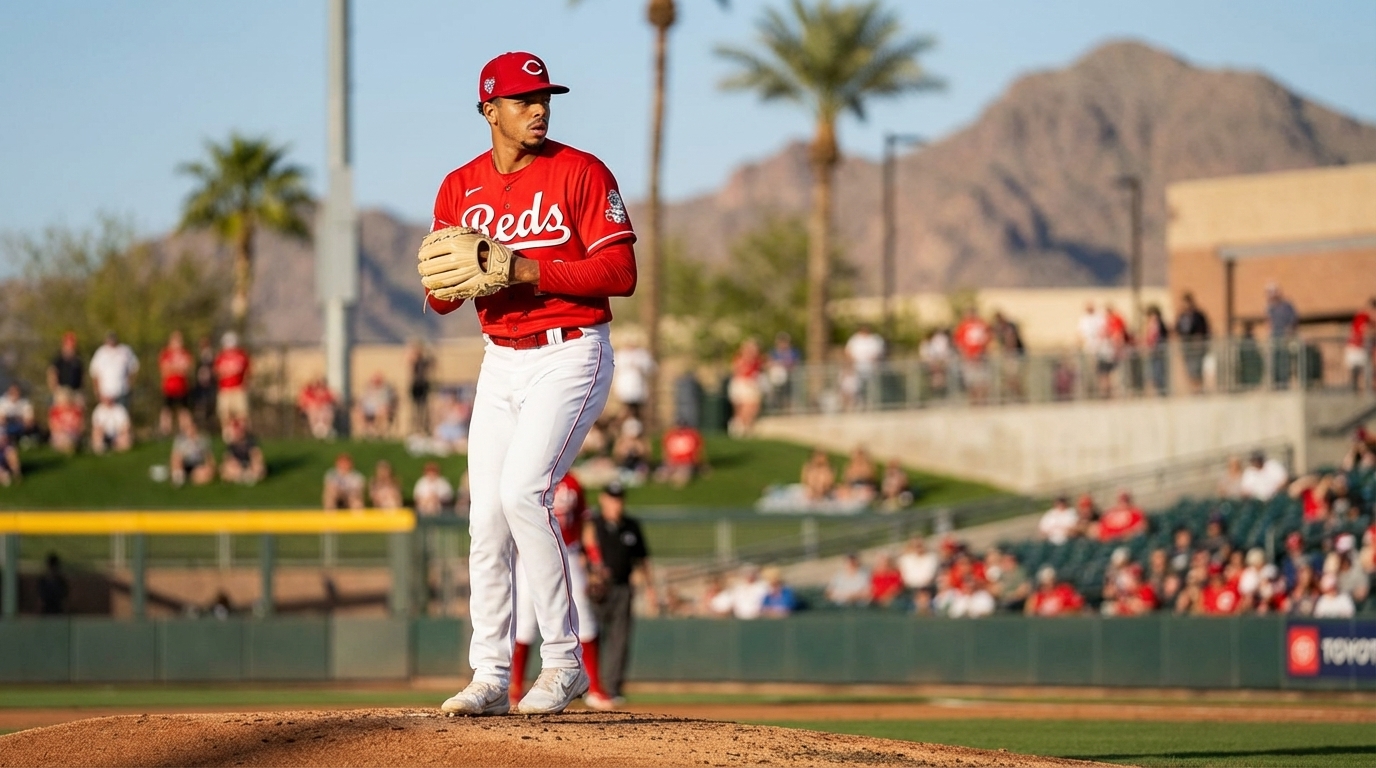
Chase Burns was humming along in spring training — two scoreless innings, two strikeouts, 24 pitches, 17 strikes — when the Reds quietly pumped the brakes. A range of motion issue in his throwing arm surfaced during the week of March 14, and suddenly the organization's most electric young pitcher went from 68 pitches in his previous outing to just 24.
Manager Terry Francona was characteristically direct: "We're nipping this in the bud right now." It's exactly the kind of caution you want to see from a staff managing a 22-year-old arm with generational upside and zero margin for error.
The Talent Is Undeniable
Burns, the former No. 2 overall pick, showed flashes of brilliance during his brief time in the majors last season. His stuff is elite — a fastball that sits in the upper 90s with ride, a wipeout slider, and a changeup that's still developing but shows plus potential. When healthy, Burns has the arsenal to be a frontline starter for years to come.
That's precisely why the Reds aren't taking any chances. In an era where young arms break down at alarming rates, the organization is prioritizing long-term health over short-term results. Burns has already been told he'll make the Opening Day roster, which means there's no need to push the envelope in March.
The Tandem Approach
Burns will enter the regular season as part of an innovative tandem arrangement with fellow young arms Rhett Lowder and Brandon Williamson. The trio will share two rotation spots, with one serving as a traditional starter, another in a piggyback role, and the third available in long relief. It's a workload management strategy designed to protect all three pitchers while maximizing their collective impact.
Andrew Abbott, Nick Lodolo, and Brady Singer will handle the first three spots in the rotation. The question of who among Burns, Lowder, and Williamson starts games four and five remains open, but the flexibility of the arrangement means no single young arm is overexposed early in the season.
The Bigger Picture
With Hunter Greene sidelined until July following arthroscopic elbow surgery, the Reds need their young pitchers to stay healthy. Burns' range of motion issue appears minor — the fact that he still took the ball on his scheduled day suggests the concern is manageable — but it's a reminder of how fragile the pitching plan is.
The Reds' medical staff is putting together a between-starts routine specifically for Burns, and the organization is confident the issue won't linger. If they're right, Burns could be one of baseball's most exciting breakout pitchers in 2026. The key word, as always with young arms, is patience. And the Reds are showing they have plenty of it.